Where Ancient Stones Meet a Living World

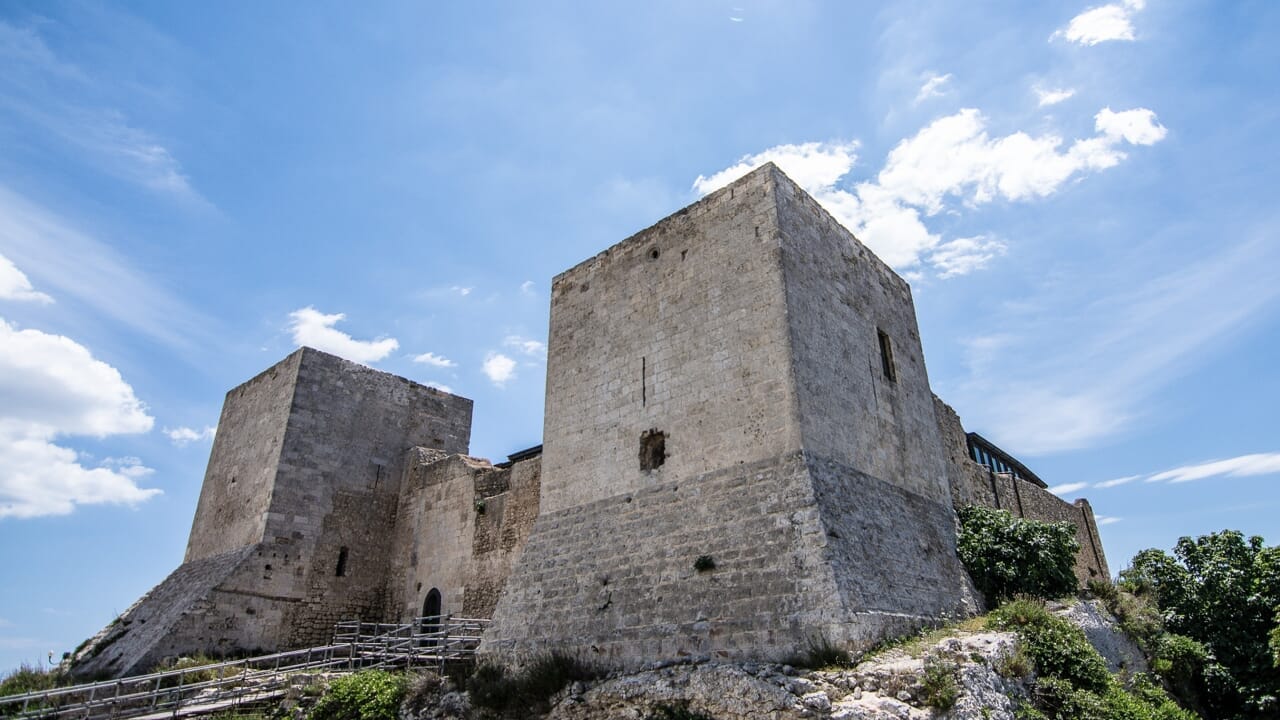
There is something quietly extraordinary about standing at the gates of Castello San Michele. From its hilltop perch, 180 metres above sea level, the fortress surveys the entire city of Cagliari — the glittering gulf, the rooftops of the old quarter, the patchwork of neighbourhoods stretching toward the sea. It is a view that has barely changed in centuries. And yet, inside these ancient walls, something altogether unexpected is waiting: a world of wings, antennae, iridescent shells, and the kind of biodiversity that most of us walk past every single day without noticing. Through May 17, 2026, Castello San Michele is home to EntoMostra – A World Teeming with Color, one of the most distinctive exhibitions to land in Cagliari this season.
A Fortress with a Thousand Lives
To fully appreciate what EntoMostra brings to this space, you need to understand the place itself. Castello San Michele is not merely a picturesque ruin kept alive by tourism brochures. It is a living document of Sardinian history — layered, complex, and at times, deeply unsettling.
The castle's origins trace back to the 10th century, when it was built to protect Santa Igia, the ancient capital of the Giudicato of Cagliari — one of the four independent kingdoms that governed Sardinia during the medieval period. The Pisans reinforced it during their struggle for control of the island, and by the 14th century it had passed into the hands of the Aragonese conquerors, who gifted it to the noble Carroz family. Under Berengario Carroz, it was transformed from a military stronghold into one of the most luxurious private residences on the island, a symbol of feudal power in a newly Spanish Sardinia.
Its most haunting chapter, however, belongs to Countess Violante Carroz — the castle's last noble inhabitant. She died within these walls in 1511, remembered by history with the chilling epithet "la Sanguinaria", the Bloodthirsty. The full story of how she earned that name has been debated and embellished by historians for centuries, but it has never been fully absolved. The castle, in a sense, carries her memory like a stone carries moss — quietly, permanently.
After her death, the fortress entered a long decline. It served as a quarantine station during the devastating plague epidemic of 1652, when thousands of Cagliari's citizens perished and the city sealed itself off from the outside world. In 1793, it was briefly reactivated as a military outpost to defend against the Napoleonic fleet that threatened the Sardinian coast — an attempt that, history records, ultimately failed to prevent the French landing. Declared a national monument in 1895, the castle spent the better part of the 20th century as a Navy radio-telegraphic station, closed to the public and largely forgotten by the city below.
It was only in 2001 that Castello San Michele reopened its doors as the Centre of Municipal Art and Culture, finally returning to the community that had lived in its shadow for generations. Since then, it has hosted concerts, contemporary art exhibitions, educational programmes, and cultural events that draw both locals and international visitors up the winding road to the hilltop. EntoMostra is the latest chapter in that st
A Universe Hiding in Plain Sight
EntoMostra – A World Teeming with Color is an entomological exhibition that does something genuinely difficult: it makes insects interesting to people who think they are not interested in insects. Through a carefully curated path of naturalistic collections, high-resolution macro-photography, and interactive informational panels, the exhibition reveals the staggering morphological variety of the insect world — the geometric precision of a beetle's shell, the architectural complexity of a butterfly's wing, the social intelligence of colony-forming species.
The underlying message is ecological and urgent. Insects represent more than half of all known living organisms on Earth. They pollinate crops, decompose organic matter, regulate pest populations, and form the base of food chains that sustain birds, reptiles, and mammals across every continent. Their quiet disappearance — driven by habitat loss, pesticide use, and climate disruption — is one of the most consequential and least-discussed environmental crises of our time. EntoMostra does not shy away from that reality. It frames wonder and urgency in the same breath, turning a visit into something closer to a reckoning than a casual afternoon out.
The Final Weekend
The closing days of the exhibition bring a programme worthy of the occasion. On Saturday, May 16 at 6:00 PM, the Castle hosts "Entomologia Investigativa" — a conference led by Giulia Murgia of the Istituto Zooprofilattico della Sardegna. The talk explores forensic entomology: the discipline that uses insect behaviour and lifecycle to assist criminal investigations, reconstruct timelines, and answer questions that no other science can. It is the kind of subject that sounds niche until someone explains it, and then it becomes impossible to stop thinking about. The session opens with a guided tour of the exhibition and closes with a toast. Booking is required.
On Sunday, May 17, the Colazione al Castello offers a gentler farewell: a morning guided tour of EntoMostra paired with a curated tasting — culture and conviviality woven into a single experience, in the way that Cagliari does best. It is a fitting close for an exhibition that has asked its visitors, week after week, to slow down and pay attention to the world at their feet.
Plan Your Visit
Castello San Michele — Via Giovanni Cinquini, Cagliari
Tuesday to Sunday, 10:00 AM – 6:00 PM
Bookings & info: 070.15240479 | castellosanmichele@orientare.it
Social: @castellodisanmichelecagliari
EntoMostra runs through May 17, 2026. Free or reduced admission may