There Are Thousands of Pink Flamingos Living in the Middle of Cagliari — and You Can Walk Right In
Between the city centre and the beach lies a 1,600-hectare nature reserve that most visitors to Cagliari never find. Right now, it is home to one of Europe's most important flamingo nesting sites. Entry is free.
Most people arriving in Cagliari expect a city. A port, a historic centre, a long sandy beach. What they do not expect — what almost nobody tells them to expect — is flamingos.
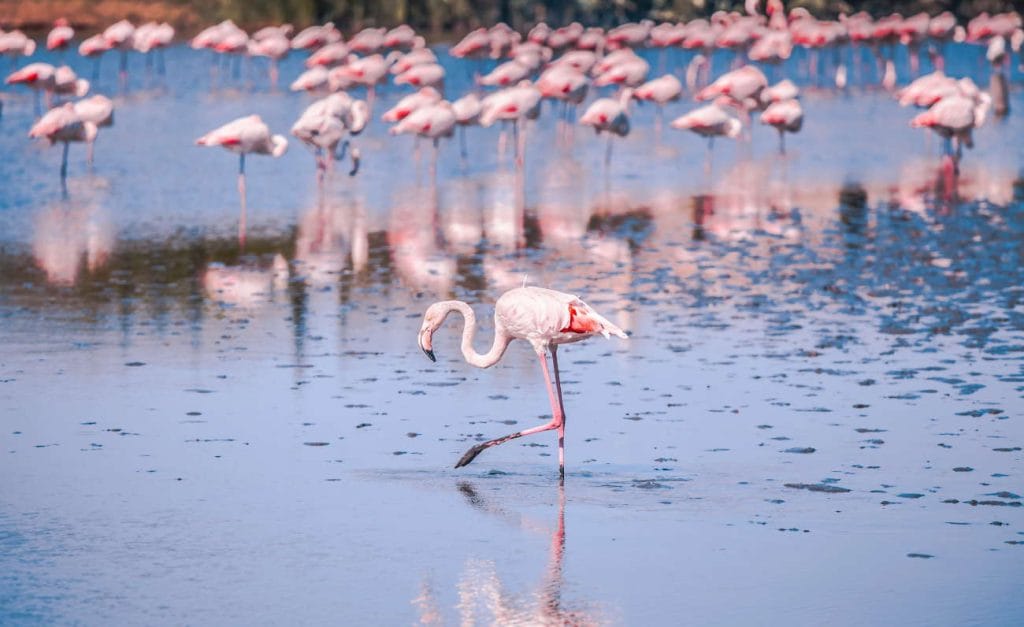
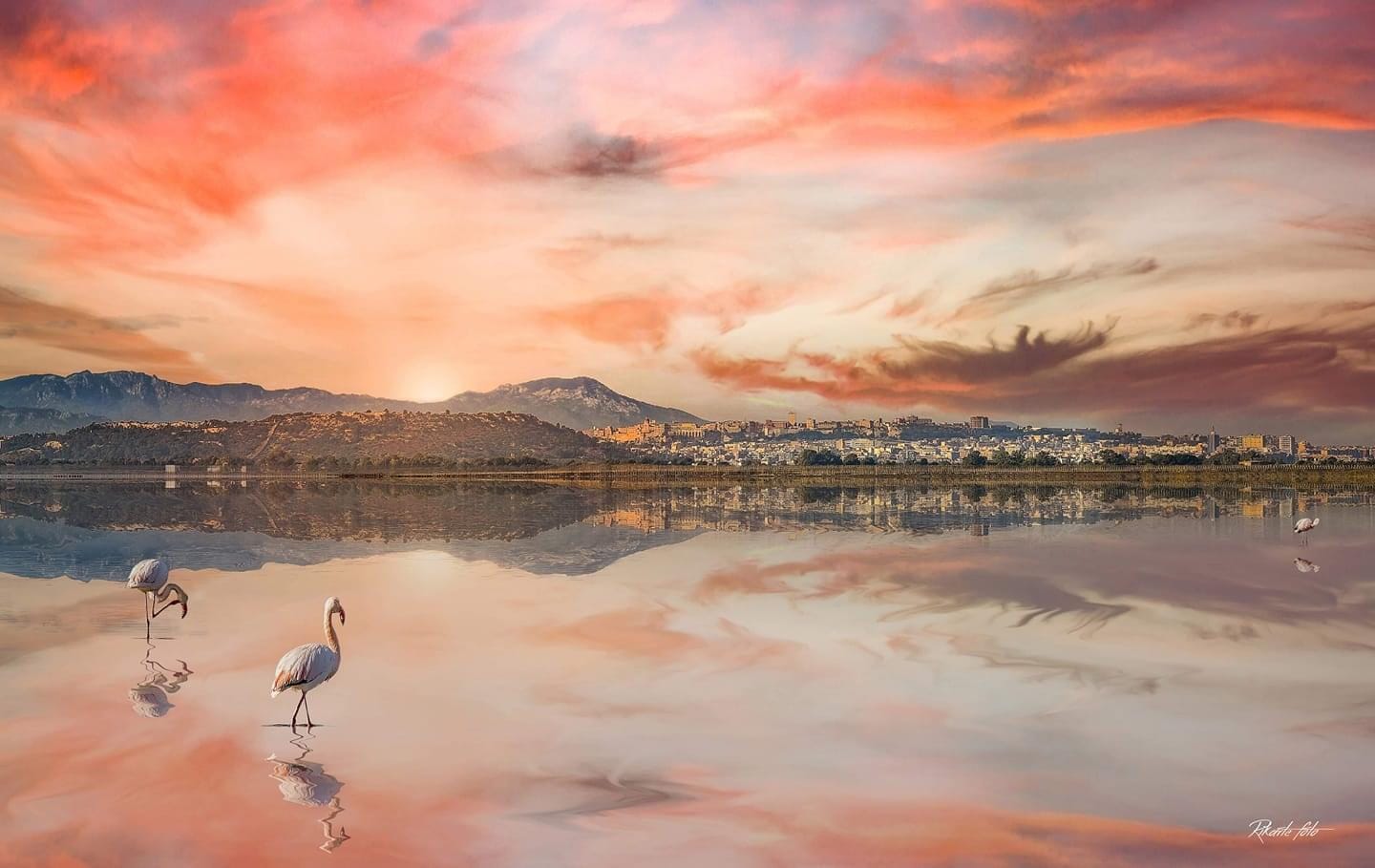
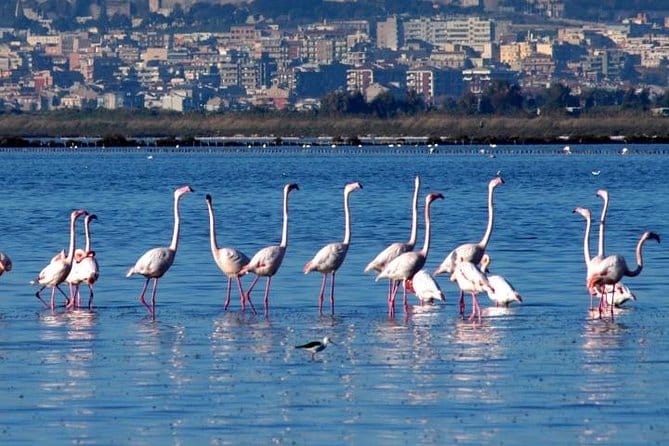
And yet, sandwiched between the urban sprawl of Cagliari and the eight kilometres of Poetto beach, there are thousands of them. Greater flamingos — tall, improbably pink, feeding in shallow water with their heads submerged and their reflections doubling in the lagoon — living inside the city boundary, within fifteen minutes of the city centre by bicycle.
The Parco Naturale Regionale Molentargius-Saline is one of the most important wetland reserves in Europe. It covers 1,600 hectares, protects over 200 species of birds, and serves as one of the primary nesting sites for greater flamingos in the entire Mediterranean basin. It has been listed under the Ramsar Convention on Wetlands of International Importance since 1977. Most international visitors to Cagliari walk past the entrance and never go in.
How It Came to Be
The name Molentargius comes from the Sardinian word for donkey — su molenti — a reference to the animals that for centuries carried salt out of these pans. The park's history is inseparable from salt. Since at least Roman times, and possibly earlier, the basins here were among the most productive salt extraction sites in Sardinia, supplying the island and the wider Mediterranean trade network. The activity continued until 1985, when the state saltworks finally closed.
What was left behind was an extraordinary patchwork of freshwater and saltwater ponds, canals, salt pans, and wetland habitats, divided by a narrow strip of fossil plain called Is Arenas. The closure of the saltworks, which might have led to development or drainage, instead triggered an ecological renaissance. In 1977, the area had already been recognised internationally under the Ramsar Convention. In 1993, the first flamingos arrived. In 1999, the park was formally established as a protected regional nature reserve.
Today, the flamingos do not just pass through. They breed here. The Bellarosa Maggiore pond is one of their primary nesting sites, and from around March through June — right now, in other words — the birds are in the middle of their mating and nesting cycle. Eggs are laid in May and June. The colonies are vast, dense, and startlingly visible: hundreds, sometimes thousands of birds standing in shallow pink-tinged water, their reflections shimmering across the surface while the city skyline rises behind them.
What Else Lives There
Flamingos are the headline, but Molentargius is far more than a flamingo reserve. The park records over 200 bird species, many of them rare or endangered. Black-winged stilts, pied avocets, western swamphens, great cormorants, little egrets, grey herons, mallards, and various species of tern are all regular residents or seasonal visitors. The glossy ibis first bred in Molentargius in 1985 — the same year the saltworks closed — and has returned every year since. Kingfishers are common. During migration season, the park becomes a critical stopover for species crossing between Europe and Africa.
The industrial past has left its own strange beauty. The former salt warehouse — a striking 1930s Art Nouveau building — now houses the park's main administrative offices and visitor centre. The ruins of the "Salt City," a small workers' settlement built in the early nineteenth century to house the saltworks employees, still stand in the interior of the park, quietly returning to nature while the birds nest around them.
How to Experience It
The park is free to enter and open daily from 8am to 8pm in the warmer months. The main entrance on the Cagliari side is at the Sali Scelti building on Via La Palma, where the park information office is also located. Binoculars can be rented at the infopoint for one euro. For anyone without a bike, the bus from Piazza Matteotti (line P) stops at Ospedale Marino, a short walk from the waterfront entrance.
The easiest and most rewarding way to visit is by bicycle. Bike rental is available at the park entrance and along the Poetto waterfront. The flat paths through the reserve are well-maintained and navigable in either direction, and the combination of cycling alongside the lagoon with flamingos visible across the water, then finishing at Poetto beach for a coffee at one of the waterfront kiosks, is one of the better ways to spend a morning or late afternoon in Cagliari. The birds are most active and most visible in early morning and around sunset.
For those who want more structure, official guided tours are offered by Città del Sale, the park's authorised tour operator, using electric minibuses or bikes. These tours access protected areas that are closed to independent visitors and include commentary on the park's ecology, history, and birdlife. They are the only way to get close to the flamingo nesting colonies without risk of disturbance. Booking in advance is recommended, particularly in spring and early summer when nesting is active.
Why It Matters
Molentargius is one of those rare places where a city has chosen to keep something wild at its heart rather than build over it. The park is not on the edge of Cagliari — it is inside it, bordered by residential neighbourhoods, a major hospital, and one of Italy's longest urban beaches. Locals use it every day: for runs, for evening walks, for the particular kind of decompression that comes from watching flamingos feed quietly in shallow water while the city hums at a distance.
In a year when Sardinia has been celebrated by Lonely Planet precisely for its authenticity and its ability to offer experiences beyond the standard tourist circuit, Molentargius represents something the island does better than almost anywhere else: nature and urban life, history and wilderness, the industrial and the ecological, all coexisting on the same patch of land.
It is also, at this exact moment in April and May, when the flamingos are nesting and the spring light turns the lagoon extraordinary shades of pink and gold, the most surprising thing you can do between the city centre and the beach.
Take the bicycle. Rent the binoculars. Go early. Go slowly.
Sources: SardegnaTurismo (sardegnaturismo.it); Cagliari Turismo (cagliariturismo.comune.cagliari.it); Strictly Sardinia (strictlysardinia.com); Città del Sale (cittadelsale.com); NextStop Italy (nextstop-italy.com); Sardinia Magic Experience (sardiniamagicexperience.com); Kupi Travel (kupi.com).