The World's Rarest Pasta Is Right Here in Our Backyard


And the New York Times just flew across the ocean to find it.
There are places in the world that hold onto their secrets well. Not out of arrogance, but out of devotion — the kind of quiet, stubborn love that a people have for something so sacred they almost don't want to share it. The mountains of northern Sardinia are one of those places. And deep within them, in the town of Nuoro and the sanctuary of Lula, lives a pasta so rare, so impossibly fragile in its construction, that the New York Times dedicated an immersive feature to it this week. The world is paying attention. We always knew it should.
Su Filindeu: A Name That Says Everything
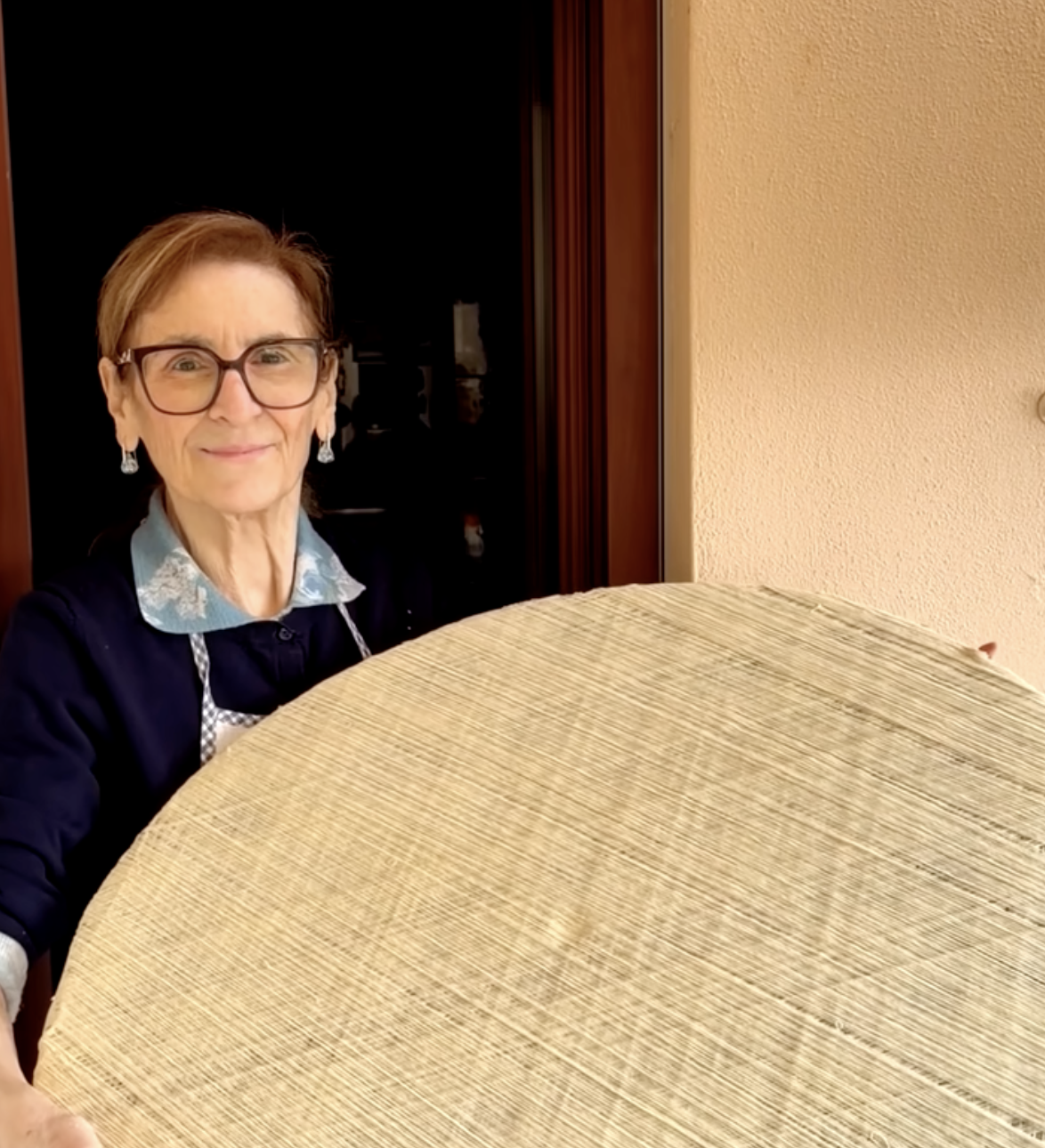
Su filindeu — in Sardo, "the threads of God". The name isn't poetic license. It is a statement of fact about what it takes to bring this pasta into existence. Made from just three ingredients — durum semolina, water, and a pinch of salt — the dough is pulled, folded, and stretched by hand through eight precise repetitions until it produces exactly 256 threads, each one barely thicker than a strand of hair. Those threads are then laid across wooden frames in three diagonal, interwoven layers, left to dry in the open air — traditionally over asphodel leaves — and broken into pieces before being submerged in a rich mutton broth and finished with fresh pecorino.
The technique is so demanding, so tied to the feel of the dough between a practiced pair of hands, that even industrial pasta manufacturers have tried to replicate it with machinery — and failed. The world's top chefs have sat down and attempted it — and failed. Today, only a handful of people on the entire planet know how to make it correctly, most of them women from Nuoro who have inherited the knowledge across generations like a whispered prayer.
A Dish Born From Pilgrimage
You cannot simply order su filindeu at a restaurant. You cannot pick it up from a shelf. To eat it the way it was intended — the only way it has ever been eaten for over 300 years — you must earn it.
Twice a year, on the 1st of May and the 4th of October, for the feast of San Francesco, hundreds of pilgrims leave the church of Nostra Signora del Rosario in Nuoro in the dead of night. They walk — 35 kilometres through the dark, through the mountains, under a sky that belongs entirely to Sardinia — until they arrive at dawn at the Santuario di San Francesco di Lula, perched at 466 metres on the slopes of Monte Albo. It takes between four and six hours. At the end of that road, they are fed su filindeu. Not as a reward. As a gift.informati-sardegna+1
That is the soul of this dish. It was never designed to be a spectacle. It was designed to nourish people who had given everything in an act of faith.
Why the World Is Finally Listening
The New York Times feature, published on May 19, 2026, frames su filindeu as one of the world's great undiscovered food experiences — a gastronomic pilgrimage hidden in plain sight. And they are right, in the way that outsiders are sometimes right when they see something you've grown up alongside and forgotten to marvel at.
For years, it was only the Abraini family of Nuoro who kept the tradition alive. Paola Abraini, who has been making su filindeu for over 40 years, became a quiet symbol of Sardinian cultural resilience — her hands carrying a living archive that no algorithm can replicate. More recently, other women have begun learning the craft, a slow but meaningful expansion of this edible heritage. The knowledge is no longer locked behind a single door.
Organizations dedicated to endangered foods have listed su filindeu as one of the most at-risk traditional preparations in the world. Not because Sardinia doesn't value it — precisely the opposite. The risk comes from the extraordinary difficulty of transmission: it cannot be written in a recipe. It must be experienced.
What This Means for Cagliari and Beyond
Cagliari is not Nuoro. But Cagliari is Sardinia. And when the New York Times runs an immersive feature about the rarest pasta on the planet being born from these mountains, it is a reminder of something we should carry with us daily: this island is not a backdrop to other people's stories. It is the story.
For the travellers, the food lovers, the culturally curious visitors who pass through our city — many of them ending up here precisely because of pieces like this one — the message is clear: if you want to understand Sardinia, you must go deeper than the coastline. You must walk towards the mountains, towards the sanctuaries, towards the women with flour on their hands and centuries of knowledge in their fingers.
The next feast of San Francesco is October 4. The pilgrimage from Nuoro to Lula is open to anyone willing to make the journey. Su filindeu will be waiting at the end of it — cooked in sheep's broth, finished with pecorino, and served the way it has always been served: without pretension, without a menu, and with the full weight of Sardinian identity behind every thread.
Some things don't need the New York Times to tell us they are extraordinary. But it doesn't hurt.
Sources: New York Times:nytimes.com, Atlas Obscura:atlasobscura.com, SBS Food:sbs.com.au, Informati Sardegna:informati-sardegna.it, Sardinia Point:sardiniapoint.it, Cuore della Sardegna:cuoredellasardegna.it, Business Insider:businessinsider.com