70 Years of a Promise: The Festa di Sant'Efisio and Why Cagliari Still Stops for It
On May 1st, one of Europe's oldest and largest religious processions sets off through the streets of Cagliari. Here's what it is, where it comes from, and why — after 370 unbroken years — the city still stops everything for it.
Most visitors arriving in Cagliari in early May notice something unusual. The streets are closed. The port is loud with bells and sirens. Thousands of people in elaborate traditional costume are walking through the city center — on foot, on horseback, behind oxen pulling flower-covered carts. And everyone, locals and tourists alike, has stopped to watch.
What they are witnessing is the Festa di Sant'Efisio: a four-day religious procession that has taken place every single year since 1657, making it one of the oldest and most continuously observed traditions in Europe. This year is the 370th edition. It begins at noon on May 1st and does not end until the evening of May 4th, when the saint returns to Cagliari by torchlight.
The Story Behind the Vow
Sant'Efisio was a Roman military officer, sent to Sardinia by Emperor Diocletian in the third century AD to suppress Christianity on the island. According to tradition, he was struck by a vision during a violent storm at sea, converted to the very faith he had been ordered to persecute, and was subsequently arrested, imprisoned in Cagliari, and beheaded at the coastal town of Nora on January 15, 303 AD. A church was built on the site of his imprisonment in the Stampace district. Another stands where he was martyred.
Three and a half centuries after his death, Cagliari was devastated by plague. In 1652, the municipal authorities made a solemn and unconditional vow: if Sant'Efisio delivered the city from the epidemic, Cagliari would carry his statue in procession to Nora — the place of his martyrdom — every year, forever. The plague passed. The city kept its word.
The first procession was held in 1657. It has run every year since. In 1943, with the city under Allied bombardment and the streets still in rubble, the statue was transported on a milk truck. The vow was kept. During the COVID-19 pandemic, a stripped-back version was held. The vow was kept again. In 370 years, it has never once been broken.
What the Procession Looks Like
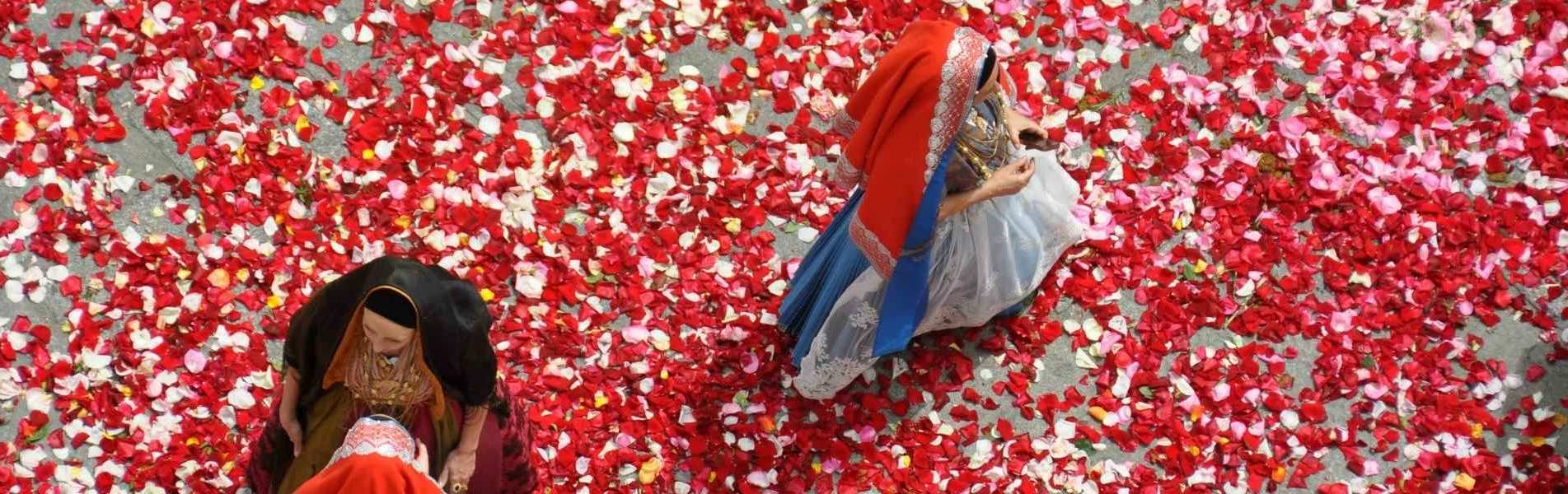
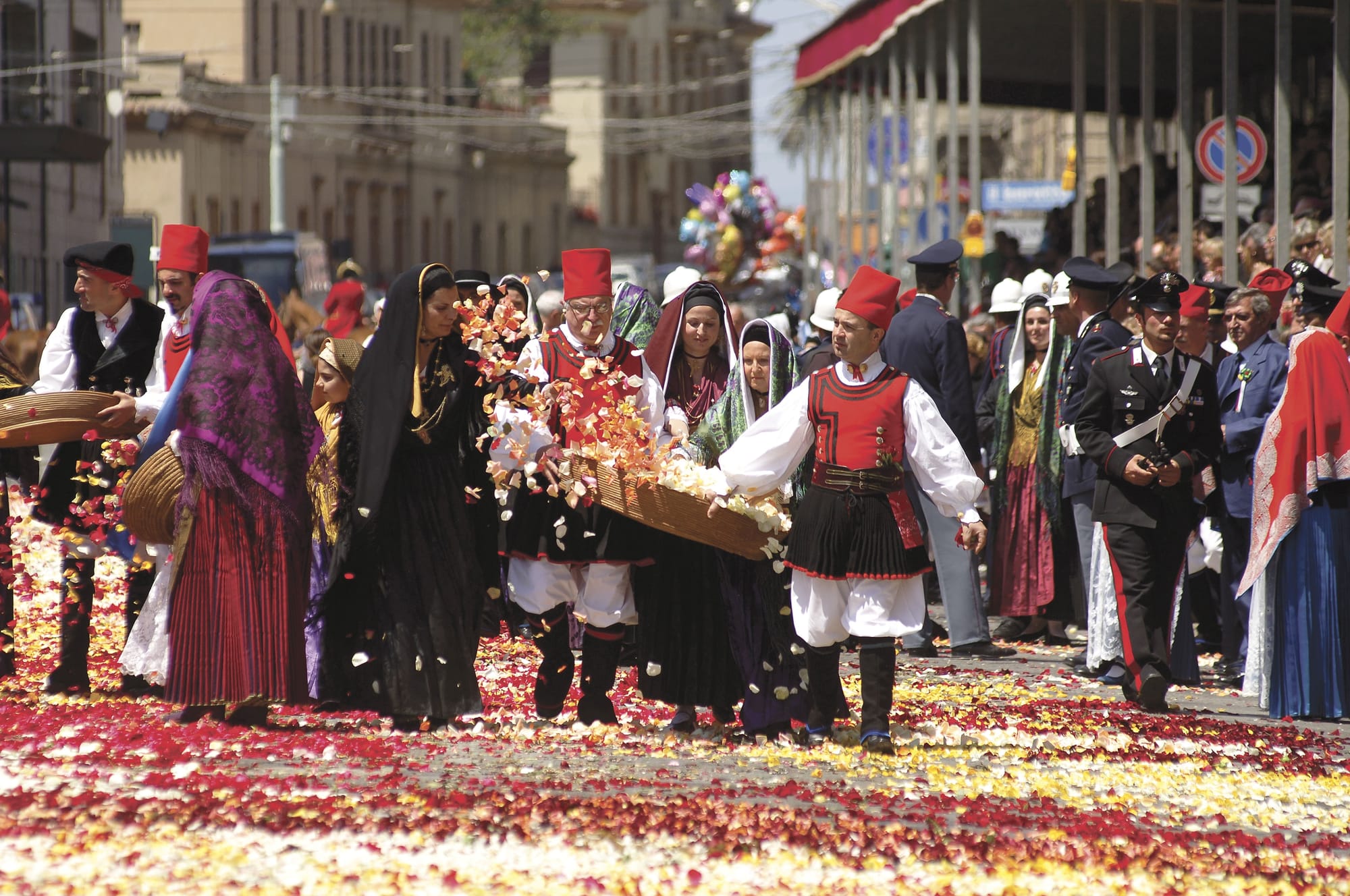
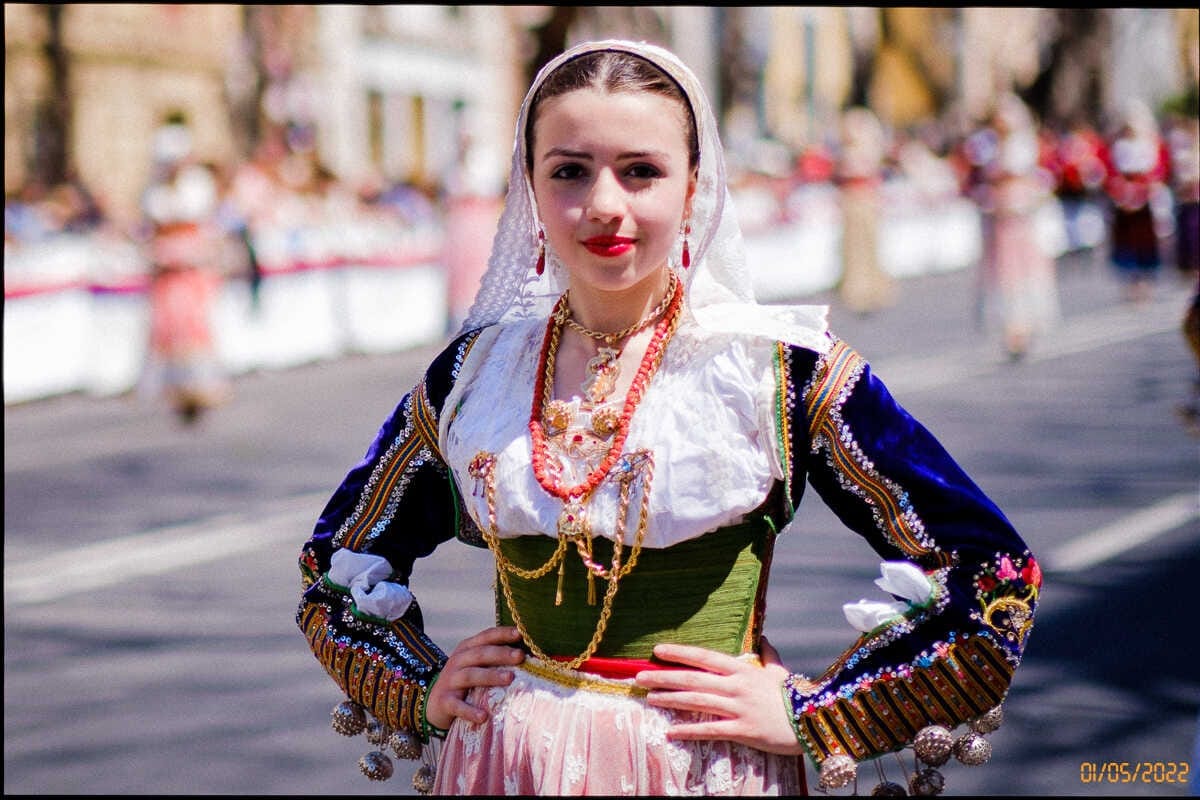
The route begins at noon from the Church of Sant'Efisio in Stampace. Leading the way are the traccas — enormous oxcarts adorned with flowers, embroidered fabrics, and traditional ornaments, each carrying a Sardinian family dressed in the costume of their village. Behind them walk more than 70 folk groups from communities across the island, each in the traditional dress of their hometown. The variety is extraordinary: the dark blues of the Barbagia highlands, the vivid reds and golds of the Campidano towns, the intricate silver jewelry of the Sulcis villages. Every costume is genuine, often worn by the same families across multiple generations.
Then come over 200 horsemen, militiamen in historical uniform, and 80 launeddas players — musicians playing the ancient Sardinian triple-pipe instrument whose sound is inseparable from the island's ceremonial life. Last of all, pulled by two great oxen, comes the golden seventeenth-century carriage bearing the statue of Sant'Efisio himself. When it passes the Palazzo Civico on Via Roma, the church bells ring out across the city and the ships in the port answer with their horns.
That is the moment Cagliari holds its breath.
Four Days, Eighty Kilometres
The Festa is not a single afternoon's event. Over four days, the procession travels approximately 80 kilometres, passing through Capoterra, Sarroch, Villa San Pietro, and Pula before arriving at Nora on May 2nd — the beach where the saint was executed more than seventeen centuries ago. On May 3rd, a sea procession carries the statue along the Nora shoreline in commemoration of his martyrdom. On May 4th, the saint begins the return journey, arriving back in Cagliari after dark, by torchlight, greeted with the traditional farewell: Altrus Annus — "Other Years." Until the promise is kept again.
On Its Way to UNESCO
The Festa di Sant'Efisio is formally under candidacy for UNESCO Intangible Cultural Heritage status. In 2014, Cagliari and the surrounding municipalities of Pula, Villa San Pietro, Capoterra, and Sarroch — together with the Archdiocese and the relevant heritage authorities — signed a protocol to pursue UNESCO listing and to put safeguarding measures in place for the ritual itself, the processional landscape, the costumes, and the music.
That candidacy reflects what anyone who has attended the Festa already understands: this is not a performance staged for tourists. The costumes are real heirlooms. The launeddas players and horsemen train for months. The participants are there because their families, like the city itself, made a promise — and intend to keep it.
How to Experience It
If you are in Cagliari on May 1st, position yourself along Via Roma or Largo Carlo Felice before noon. Arrive early — the streets fill from dawn. The best moment is when the golden carriage passes the Palazzo Civico and the ship horns sound; stay for it. Accommodation in Cagliari in early May books out fast, particularly in the Stampace and Marina districts closest to the route.
Cultural events surrounding the Festa run from late April through May 4th, including exhibitions of traditional instruments and devotional jewelry, evenings of launeddas performance, and four-part tenore choral singing in Piazza del Carmine and at the Palazzo Civico.
If you can follow the procession beyond the city — even just to Giorgino, where the saint exchanges his ceremonial dress for travelling clothes before leaving Cagliari — the atmosphere shifts into something quieter and more intimate. Worth the walk.
The 370th edition begins at noon on May 1st. Cagliari will stop. It always does.
Sources: Cagliari Turismo (cagliariturismo.comune.cagliari.it); SardegnaTurismo (sardegnaturismo.it); SardegnaCultura (sardegnacultura.it); Mia Sardegna; Beevago; Agenzia Nova.